Mastering FPV Camera Tilt: Your Personal Flight Companion
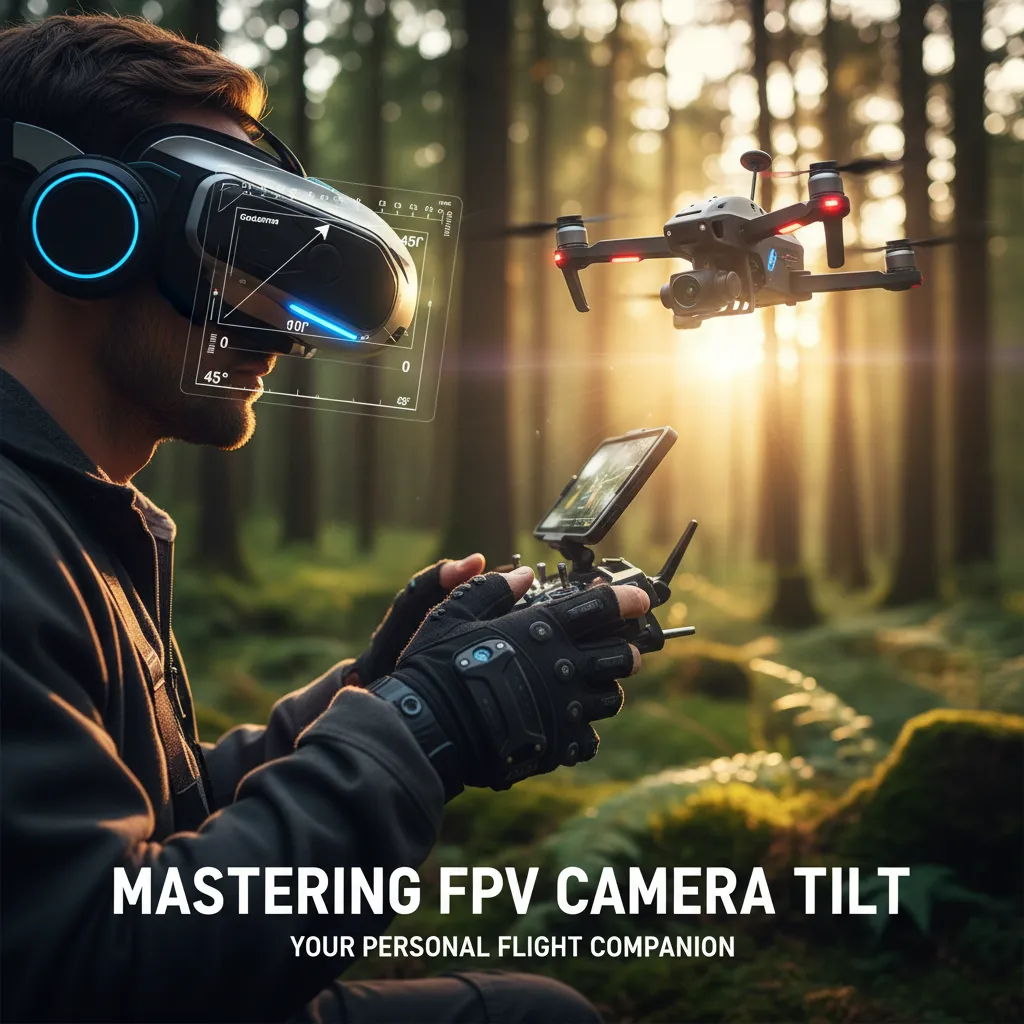
Back when I was fumbling with my first FPV drone, I remember asking the very question that haunts newbie pilots: 'What camera angle should I fly?' It dawned on me quickly that the answer isn't cut-and-dry. Your FPV camera tilt isn’t just a number; it’s a living part of your flying experience that adjusts as you grow and explore different flying styles. Let's unpack this puzzle together from my early shaky flights to freestyle spins and cinematic swoops.
TL;DR: FPV camera angle shapes how you control and enjoy your drone. Start low (10°–15°) as a beginner, then tailor tilt for freestyle tricks or cinematic shots. Your comfort is key.
The Personal Nature of FPV Camera Tilt
When I first started flying FPV drones, the question I heard most was, “What camera angle do you fly?” It didn’t take long to realize there’s no universal answer. FPV camera tilt is a deeply personal choice, shaped by your skill, flying style, and what you want from your drone build. Over time, I learned that choosing a camera angle is about what feels right for you, not just what others do.
For beginners, a lower camera tilt—usually in the 10°–15° range—makes all the difference. With a shallow angle, I could hover, land, and steer in tight spaces without feeling overwhelmed. This was especially true when flying tiny whoops or practicing indoors. The lower tilt gave me more time to react and helped me master throttle control, making the whole learning process much less frustrating. In my early days, this conservative approach kept me in control and built my confidence.
As my skills improved, I started bumping up the camera angle in small steps—sometimes just 5° at a time. Each increase changed how the drone felt in the air, letting me fly faster and tackle more advanced maneuvers. I quickly noticed that a higher camera angle didn’t make my drone faster, but it did let me fly comfortably at higher speeds because the horizon stayed in view as I pitched forward.
When I moved into freestyle flying, I saw that pilots have their own sweet spots, often between 20° and 35°. Personally, I found my comfort zone at 25°–30°, which matched my favorite tricks and flying pace. But even among experienced pilots, preferences vary widely—some tricks are easier with a lower tilt, while others need a steeper angle.
It’s also worth noting that camera angle affects the feel of flight more than the top speed. Lower angles make it easier to hover and land smoothly, especially in small or indoor spaces. For new pilots, starting with a conservative tilt prevents early frustration and gives you time to build muscle memory. Gradually increasing your angle unlocks new speeds and flight dynamics as you grow.
Choosing a camera angle is about what feels right for you, not just what others do.
Freestyle Flying and Its Demanding Tilt Preferences
When I first dove into the world of FPV freestyle, I quickly realized that camera angle is more than just a number—it’s the heartbeat of every trick and line I fly. Freestyle flight is a dance where your camera angle sets the rhythm. The right tilt not only shapes how the world looks through your goggles, but also determines how smoothly you can pull off rolls, flips, and power loops.
Most FPV freestyle pilots settle into a camera angle between 20° and 35°. This range gives enough forward tilt to fly with speed and flow, but not so much that you lose sight of obstacles or the horizon during sideways or vertical maneuvers. Personally, I find my sweet spot around 25°–30°. This lets me keep the horizon in view while still having enough tilt for fast, sweeping moves and quick recoveries. It’s a balance that matches my speed and the types of tricks I love to perform.
I’ve noticed that pushing the angle too high—say, above 35°—can actually make some freestyle moves harder. For example, when I try to slow down for tight gaps or landings, a steep camera angle means I’m mostly staring at the sky, making it tough to judge distances and avoid obstacles. On the flip side, going too low with the tilt can make the drone feel sluggish and limit my ability to keep up with fast, flowing lines. It’s all about finding that personal comfort zone where your camera settings and flying style work together.
Freestyle also demands a lot of sideways and backward movement, not just forward flight. Adjusting the camera angle changes how much of the environment you see during these moves. A higher tilt gives a faster perceived speed and a wider field of view ahead, but it can hide the ground and obstacles when you’re moving slowly or performing technical tricks.
For recording, I always match my FPV camera angle with my action camera and use ultra-wide settings at 60fps for buttery-smooth footage. This way, what I see in my goggles is what I capture on video, making it easier to review and improve my flights.
| Freestyle Preferred Angle | Recommended Ultra-Wide Cam Settings |
|---|---|
| 25°–30° | 60fps for recording |
The Intricacies of Cinematic FPV and Adaptive Angles
When I first tried cinematic FPV, I quickly learned that FPV camera tilt is far more than a technical setting—it’s the secret ingredient that shapes every shot. Unlike freestyle, where I might lock in a favorite angle, cinematic flying demands flexibility. The right angle depends entirely on the type of shot and the speed I want to achieve. If my camera tilt is too shallow, my footage ends up showing mostly the ground; too steep, and I’m capturing nothing but sky. Finding that sweet spot is a constant dance between my creative vision and the realities of flight.
One of the first lessons I picked up was the importance of matching my action camera tilt with my FPV camera. If the two aren’t aligned, what I see in my goggles won’t match what’s recorded, leading to awkward surprises in post-production. Before each flight, I always double-check that my GoPro or similar camera is set to the same angle as my FPV cam. This simple step ensures my footage feels authentic and true to the flight experience.
Cinematic FPV is all about storytelling through fluid, adaptable perspectives. I often adjust my camera angle on location, sometimes even between takes, to get the exact composition I want. For slow, sweeping shots, I’ll drop the tilt to around 10°–15°, keeping more of the landscape in view. For fast, dynamic chases, I might bump it up to 25° or higher, letting the horizon sit perfectly in frame as I zip forward. These on-the-fly adjustments are essential for nailing the shot.
Another crucial tool in my kit is the ND filter. For cinematic FPV, ND filters help manage exposure and add natural motion blur, making footage look smooth and professional. Without them, bright days can blow out highlights and make everything look harsh. I always keep a set handy, especially when shooting with high-resolution action cameras.
Modern drones are pushing boundaries with AI stabilization and even 8K/120fps cameras. By 2026, I expect these features to become standard, making cinematic FPV more accessible and visually stunning. But no matter how advanced the tech gets, the artistry still comes down to how we use adaptive angles to tell our stories from the sky.
Throttle Response and Flight Dynamics: How Tilt Influences Control
When I started building my first FPV drone, I never realized how much the camera angle would affect the way my quad handled in the air. It’s easy to think of camera tilt as just a visual preference, but the truth is, it directly shapes flight dynamics and throttle response. As I experimented with different angles, I learned that adjusting camera angle isn't just about what you see—it changes how your drone moves.
With a low camera tilt—say, between 10° and 15°—I noticed my quad felt extremely sensitive to throttle input. Because the drone flies nearly level, most of the thrust points straight down. This means even the slightest bump of the throttle sends the drone shooting up or dropping quickly. On lightweight builds with powerful motors, this effect is even more pronounced, making altitude control feel twitchy and unpredictable. I found myself constantly fighting to keep a steady height, especially when flying indoors or in tight spaces.
As I increased the camera angle, something interesting happened: the drone naturally pitched forward more to keep the horizon in view. This forward tilt redirected the thrust vector rearward, not just downward. The result? Throttle response became noticeably smoother. Instead of sudden vertical jumps, the quad glided forward, and altitude changes felt more gradual and controlled. For my freestyle builds, bumping the angle up to 25°–30° made throttle management much more predictable, especially during fast runs or complex tricks.
- Low camera angles: Higher throttle sensitivity, abrupt altitude changes, best for slow, precise flying or learning basic controls.
- Higher camera angles: Thrust shifts rearward, vertical acceleration is dampened, throttle feels smoother—ideal for fast, flowing freestyle or racing.
- Powerful, lightweight drones: More affected by tilt-related thrust changes; tuning camera angle is crucial for flight stability.
Flight stability is closely tied to camera tilt settings. The right angle helps your flight controller interpret your stick inputs more predictably, making the whole drone build feel more responsive and locked in. Whenever I help new pilots, I always stress that camera tilt isn’t just a visual setting—it’s a key part of tuning your FPV drone for the way you want to fly.
Finding Your Unique FPV Camera Angle: A Pilot’s Journey
When I first started my FPV journey, the question of “What camera angle do you fly?” seemed simple, but I quickly learned it was anything but. The truth is, FPV camera tilt is a deeply personal choice—one that should reflect your comfort, flying style, and goals, not just what’s trending or what others are doing. If you’re just beginning, my strongest advice is to start with a low camera angle, around 10°–15°. This gentle tilt gives you the best chance to build muscle memory, master throttle control, and land with confidence, especially if you’re flying in tight indoor spaces or with tiny whoops.
As your skills grow, so should your willingness to experiment. I found that gradually increasing my camera angle in small steps—just 5° at a time—helped me adapt to faster speeds and more dynamic flight without feeling overwhelmed. This incremental approach is key: it lets your muscle memory and visual feedback adjust naturally, making each new angle feel like a comfortable extension of your abilities. Remember, FPV flying is a personal journey where your camera angle evolves with your skills.
When I moved into freestyle and long range FPV, I noticed that advanced pilots often have their own sweet spots, usually between 20°–35°, depending on their trick repertoire and preferred speed. But even then, comfort and control always trumped copying someone else’s settings. For cinematic flights, I learned to adjust my angle on the spot, matching it to the shot I wanted and the speed I planned to fly. Flexibility became my best flight companion, especially when using a flight controller that made angle tweaks quick and easy.
One of the best parts of this hobby is the freedom to tinker. Drones like the NewBeeDrone LionBee 1S 3-Inch Long-Range FPV, powered by a 18650 cell, make it easy to experiment with different angles and find what truly fits your style. Through countless flights, I’ve realized that the process of trial, error, and gradual adaptation is what leads to mastery. Your ideal camera angle isn’t a fixed number—it’s a reflection of your journey, your comfort, and your evolving skills.
So, don’t rush to match someone else’s setup. Let your own comfort and flying goals guide your FPV camera tilt. In the end, the best angle is the one that feels right for you—and that’s what makes every flight uniquely yours.

